

In the context of the (EU) 2017/746 In Vitro Diagnostic Regulation (IVDR), manufacturer are required to provide transparent and well-documented evidence of device performance. To meet these requirements, we conducted a detailed performance evaluation of our semi-automated clinical chemistry analyzer Photometer 5010 in version 9, focusing on its analytical performance under routine laboratory conditions. This study provides a comprehensive overview of key performance parameters, including precision, accuracy, linearity, and limit of detection, in alignment with IVDR standards. Our results not only highlight the reliability and robustness of the analyzer but also support its suitability for clinical use, ensuring compliance with regulatory expectations. By sharing these findings, we aim to contribute to the growing body of evidence supporting quality assurance in clinical chemistry.
In our performance evaluation of the semi-automated clinical chemistry analyzer, we adhered to the requirements of European Pharmacopoeia EP 11, Chapter 2.2.25 (Absorption Spectrophotometry, Ultraviolet and Visible), governing wavelength accuracy, absorbance accuracy, photometric linearity, stray light limits, and spectral resolution. By following EP 11’s prescribed control procedures and using certified reference materials (e.g. neutral density filters, solutions), we ensure that our photometric measurements meet recognized quality standards and offer robust, traceable results in compliance with pharmacopoeial norms.
These are some of the controlled parameters:
1. Absorbance accuracy
2. Photometric linearity
3. Limit of stray light
4. Carry-over ratio.
* Requirements well summarized on https://www.hellma.com/en/calibration-standards/european-pharmacopoeia-ep-11
* The necessary parameters during the analytical performance are described in point (a) of Section 9.1 of Annex I of the Regulation (EU) 2017/746 (IVDR).
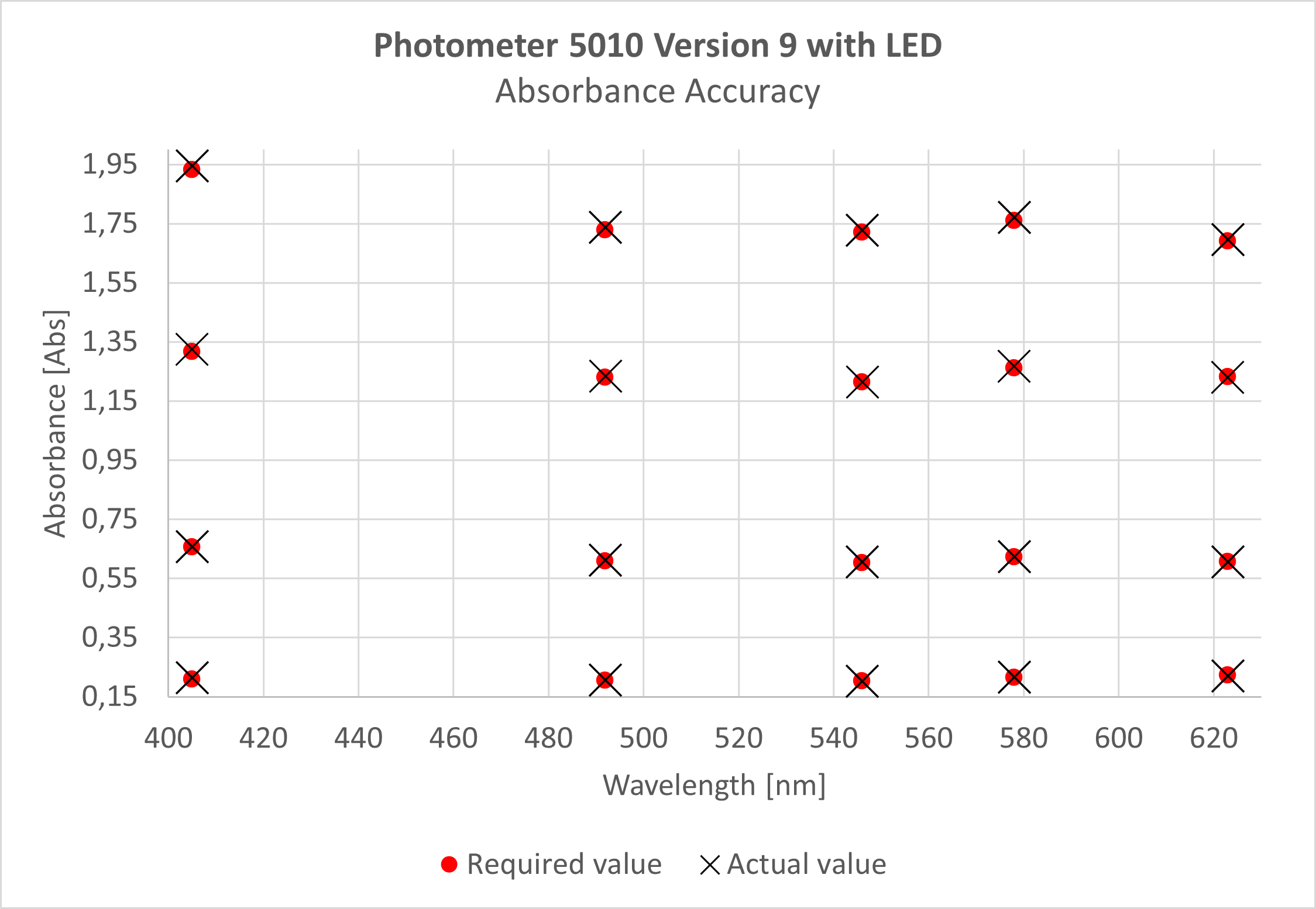
Absorbance accuracy (also called photometric accuracy) measures how closely an instrument’s absorbance reading matches the certified value of a reference material.
By testing and confirming absorbance accuracy, laboratories can demonstrate that their photometric measurements are traceable, reliable, and fit for clinical decision-making.
Calibrated solid filter (neutral density glass filter) of MAASSEN GmbH were used for the visible range.
The measured absorbance at each test wavelength must not deviate from the certified (reference) value by more than ±0.01 Absorbance (Abs) for values below 1.0 Abs and ±1% of the measured value for those above 1.0 Abs.
Our Photometer 5010 in version 9 showed for absorbances below 1.0 Abs deviations <±0.01 Abs and above 1.0 Abs an average deviation of 0.4%. The device is therefore meeting the acceptance criterion.
Check the absorbance accuracy with
RIELE Secondary Calibration Standards REF 090-064

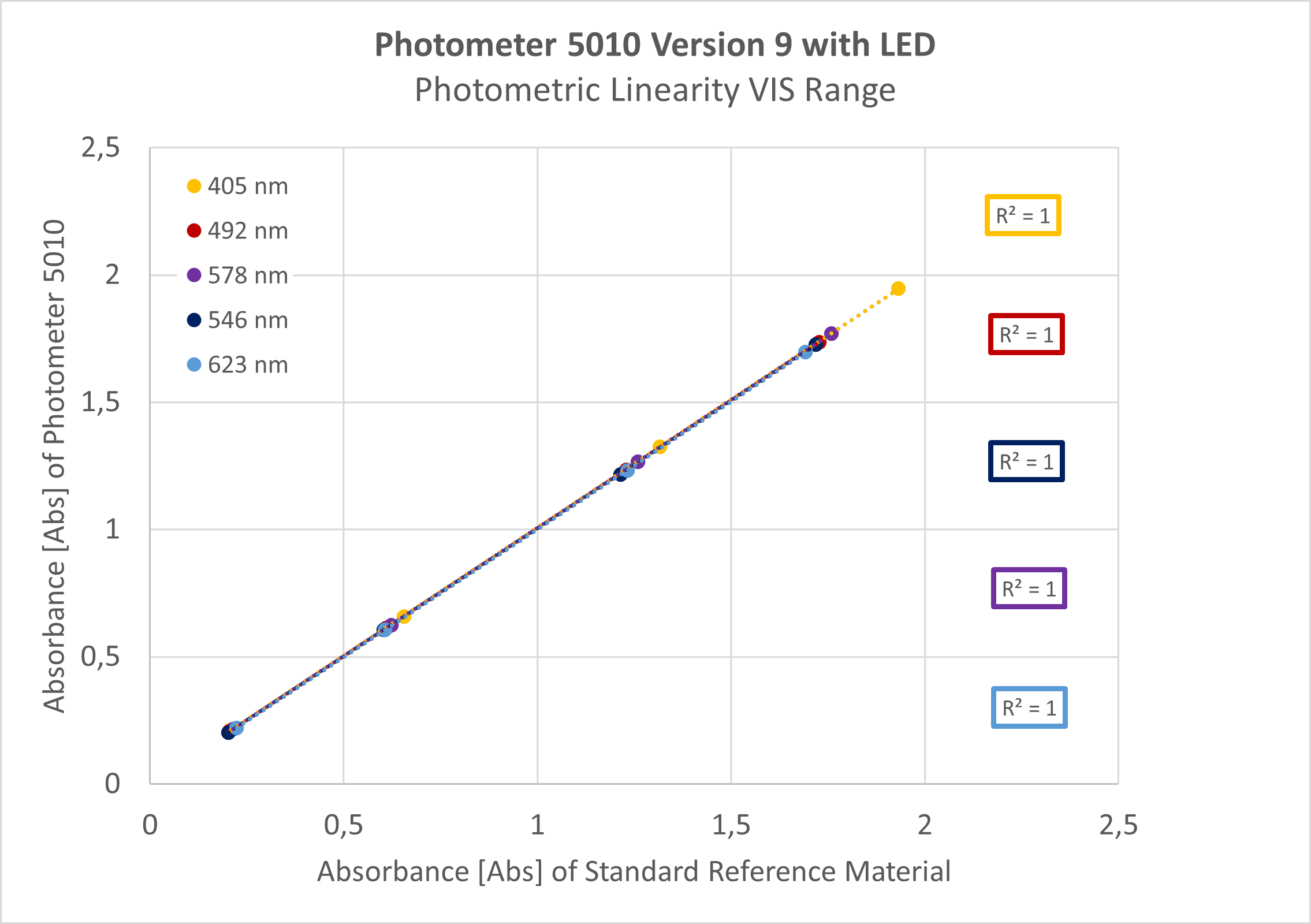
Photometric linearity is a key parameter in the analytical performance evaluation of spectrophotometers and clinical chemistry analyzers. It describes the ability of an instrument to provide accurate absorbance values across a defined measurement range, ensuring that the response remains proportional to the concentration of the analyte. In accordance with international standards such as the European Pharmacopoeia (EP 11, Chapter 2.2.25) and IVDR requirements, photometric linearity testing verifies the reliability, precision, and traceability of laboratory results.
Typically at least three absorbance levels (or filters) are tested, and a common acceptance criterion is R2≥0.999. In our study for the VIS range Master Standard Reference Material (MAASSEN GmbH) at four abosorbance levels were used. For the UV range at 340 nm different concentrations of a sodium nitrite solution (5g/L) was used. Also the results of the photometric linearity are meeting the acceptance criterion. These results also show that our analyzers are linear in the photometric range between 0.0 – 3.0 Abs.
Check the photometric linearity with
RIELE Secondary Calibration Standards REF 090-064
Stray light is defined as any unwanted radiation that reaches the detector but does not originate from the selected wavelength. In clinical chemistry analyzers, excessive stray light can cause significant errors in absorbance measurements, particularly at higher absorbance values. According to the European Pharmacopoeia (EP 11, Chapter 2.2.25), instruments must be tested with certified cutoff filters or solutions to verify that stray light remains within acceptable limits.
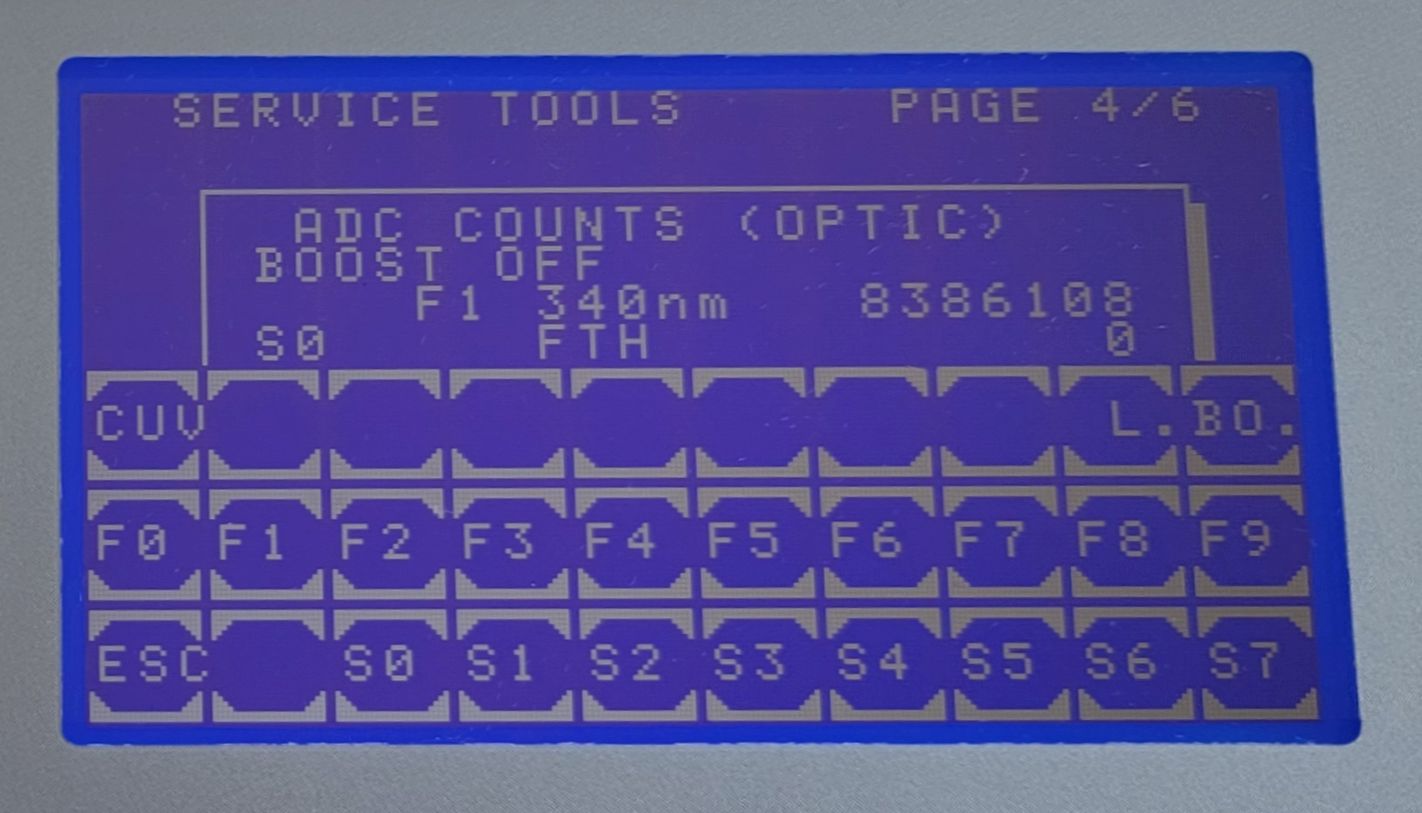
A 100% sodium nitrite solution (5g/L) was measured at 340 nm and Error 5 occured. This means that the dark value of the photometer is absolutely too high or higher as the measurement. In our menu ADC COUNTS (OPTIC) with no amplification of the signal the device was showing for lid open as well as for lid closed 0 counts. This means that no light is reaching the detector.
It is, however, recommandable that while using standard cuvettes to close the lid of the optical compartment.
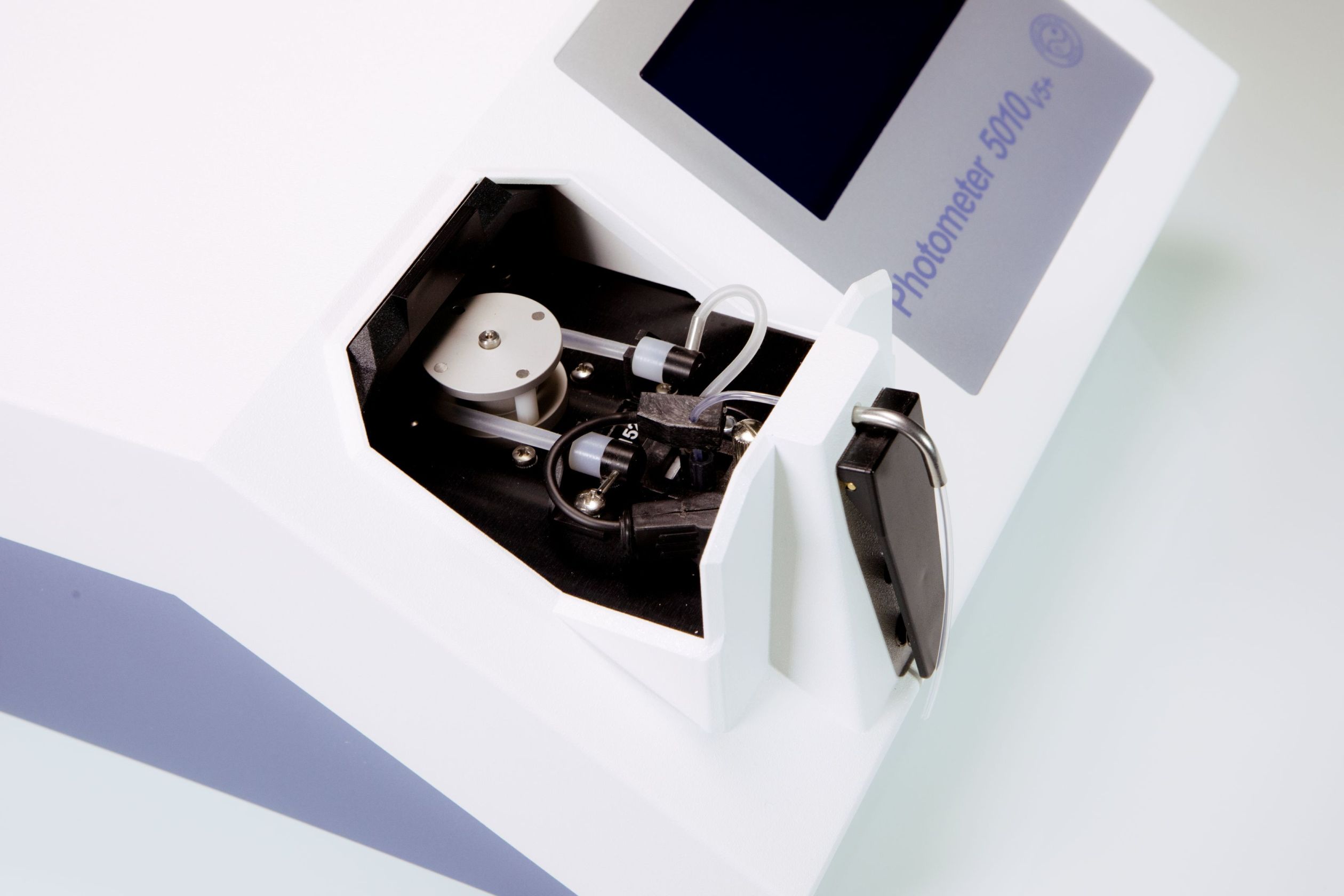
Testing the carry-over ratio after Broughton is a critical analytical performance characteristic for semi-automated clinical chemistry analyzers under IVDR. Using sequential high and low concentration samples (H1→H3 → L1→L3), the Broughton method quantifies sample-to-sample contamination.
The Photometer 5010 was tested with a low (~ 0,25 Abs) and high (~1,80 Abs) concentrated solution for 405 nm. The acceptance criterion is a ratio of ±1%.
For VOLUME OPTIMIZED ON the carry-over was 0,5% and for OFF 0,3%.